
Puppy Deworming Schedule Guide
Use this page as a simple guide to common puppy deworming timing and recordkeeping. Always confirm your official deworming plan, products, and fecal testing schedule with your veterinarian.
Why puppy deworming matters
Puppies can pick up intestinal parasites early, including from their mother. That is why many breeders and veterinarians follow a structured early deworming plan.
Clear records also help when sending home puppies, answering buyer questions, and planning follow-up care.
What to keep track of
Common puppy deworming schedule
This is a general guide only. Your veterinarian should confirm the medication, timing, parasite screening plan, and monthly preventive product for your litter.
| Age | Common guide | Breeder note |
|---|---|---|
| 2 weeks | First early deworming is commonly discussed around this age. | Start per-puppy health tracking now. |
| 4 weeks | Next deworming step is commonly repeated around this time. | Log any notes your vet wants tracked. |
| 6 weeks | Another repeat is commonly included in early puppy schedules. | Useful timing to keep litter records current before puppies become more active. |
| 8 weeks | Many breeder schedules include another deworming checkpoint here. | Good time to double-check each puppy’s individual record. |
| After early puppy doses | Monthly broad-spectrum parasite control may be recommended by your veterinarian. | Do not guess on product choice or start date. |
| First year | Follow-up fecal testing and prevention planning should be reviewed with your veterinarian. | Set reminders so follow-up does not get missed. |
What breeders should record
Keep each entry alongside the puppy's development milestones so care and growth history remain connected.
- Puppy identifier or collar color
- Date dewormer was given
- Product used, if provided by your vet
- Any stool or health notes
- Next recommended due date
- Fecal test reminders
Cleanliness and follow-up matter too
Deworming is only one part of parasite control. Clean housing, fast cleanup, and follow-up testing are also important.
- Keep the whelping area clean
- Remove stool promptly
- Review fecal screening with your veterinarian
- Confirm when monthly prevention should begin
Simple breeder follow-up checklist
How SmartPupPro helps with puppy deworming records
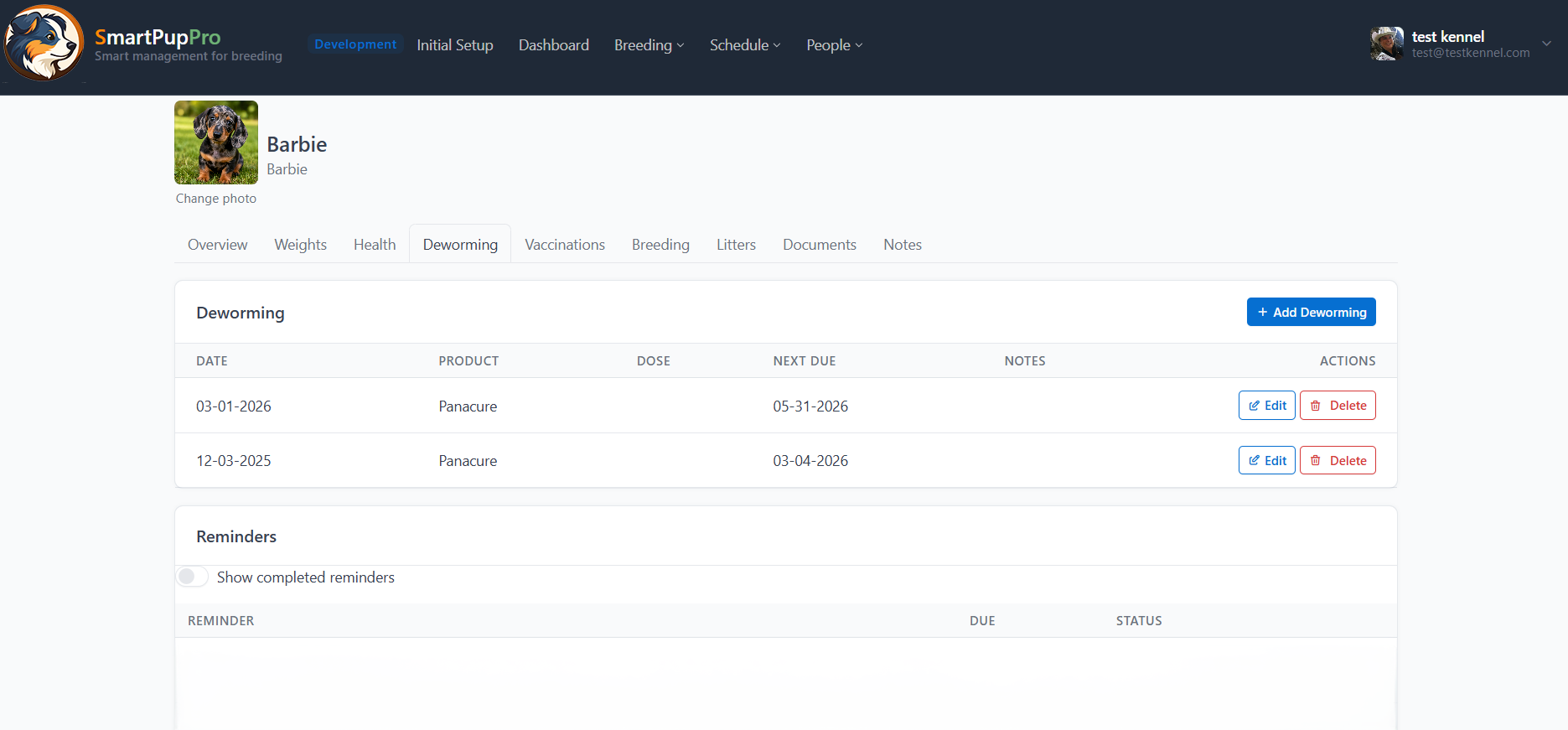
Deworming is easier to stay on top of when each puppy’s health steps are tracked in one place. SmartPupPro helps breeders keep litter care more organized from the whelping room through go-home day.
SmartPupPro for breeder workflows
SmartPupPro helps breeders organize litter records, puppy weights, health steps, reminders, and daily notes without relying on scattered paper records.
Frequently asked questions
Is this an official puppy deworming schedule?
No. This page is a general guide only. Your veterinarian should confirm your litter’s official deworming plan.
Why do puppies get dewormed so early?
Puppies can be exposed to intestinal parasites very early in life, which is why early breeder and veterinary planning matters.
Should every puppy follow the exact same product plan?
Not necessarily. Product choice and timing should be confirmed by your veterinarian based on parasite risk, age, weight, and health status.
Do I still need fecal testing if I deworm on a schedule?
Fecal testing is still important. Ask your veterinarian what screening plan they want for your puppies.
Ready to keep puppy care records more organized?
SmartPupPro helps breeders track litter notes, puppy health steps, reminders, and records in one place.